
What Makes a Toronto Home Truly Sustainable?
Hint: It’s Not Just the Materials
Sustainability isn’t a checklist. It’s a way of thinking, designing, and living.
When most people hear “sustainable home,” they picture solar panels, triple-glazed windows, and heat pumps. And while those things matter, they only tell part of the story. Sustainability isn’t something you tack on at the end of a building project, it’s something you start with, in the way a home is imagined, sited, and shaped. We believe true sustainability lives in the decisions you make before you build, in how you size your spaces, work with what already exists, and design for the long term. It’s not about doing more, it’s about moving forward with discernment, clarity and care.
Part I: What Most People Want to Know About Sustainable Homes
What is a sustainable home?
A sustainable home is one that minimizes its environmental footprint while supporting the comfort, well-being, and long-term needs of its occupants. That means it’s energy-efficient, climate-adapted, built with minimal waste, and designed to last. It also considers water use, materials, and how the home fits within the urban or natural context.
What type of house is most sustainable?
Generally, smaller homes with compact forms are most sustainable, especially when they use passive design principles. Passive House, Net-Zero, and LEED-certified homes offer high performance, but even retrofitting existing homes can lead to strong sustainability outcomes, and save carbon in the process. The key isn’t size or style - it’s design intent, energy use, and longevity.
What is the Greener Homes program in Canada?
The Canada Greener Homes Initiative offers up to $5,000 in grants and up to $40,000 in interest-free loans for energy-efficient home improvements. These include insulation upgrades, heat pumps, windows and doors, renewable energy systems, and more. To participate, homeowners must complete a pre- and post-retrofit EnerGuide assessment.
How can you make your house sustainable?
Start by reducing energy use. This includes upgrading insulation, installing energy-efficient systems (like heat pumps and HRVs), sealing air leaks, switching to LED lighting, and using smart thermostats. Low-flow plumbing, solar panels, and triple-glazed windows can also make a significant impact. Materials matter, too: choose low-VOC finishes, FSC-certified wood, and products with recycled content where possible. Good ventilation, long-lasting construction, and responsible sourcing also contribute to sustainability.
But sustainability isn’t about what you use, it’s also about how and why you build…
Part II: What If Sustainability Meant Something Deeper?
Now that you’ve explored the basics of sustainable building, let’s go deeper. A truly sustainable home doesn’t begin with the materials, it begins with a principle. Sustainability isn’t something you add on. It’s something you design from.
Design with Intention, Live Sustainably and with Ease
We believe one of the most powerful and overlooked sustainability choices begins with how space is planned.
We don’t design for hypothetical “what ifs”, like the oversized dining room for the annual dinner party, or the rarely-used guest suite. These spaces take up square footage, materials, and energy without adding meaningful value to daily life.
Instead, we design for how you actually live. That means thinking deeply about how rooms are used, how they connect, and how they adapt over time. A well-designed home doesn’t just feel good. It works hard, with spaces that serve multiple functions and flow with ease.
Spatial planning is where sustainability starts because every square foot you don’t build saves energy, materials, and cost - not just during construction, but for the life of the home. And every square foot you do build should be there for a reason: to support care, creativity, connection, and comfort. It’s not just about the right amount of space, it’s about the right kinds of spaces, designed to do more with less.
Design with the Climate in Mind: Passive Systems Done Right
Begin every project by asking how the home can work with its environment, not against it.
That’s where passive systems come in. These are natural, design-led strategies that help regulate heat, airflow, and light, without relying on mechanical equipment. Think: sun-warmed floors in winter, shaded rooms in summer, cool breezes instead of AC.
We design for:
Orientation to the sun for passive heating
Overhangs, trees, or screens for passive cooling
Cross-ventilation through window placement for natural air regulation
Thermal mass (like concrete floors) to regulate heat
A compact, airtight envelope to prevent energy loss
These aren’t afterthoughts, they’re foundational design choices.
And here’s the secret: when you design for them from the beginning, they don’t cost extra.
They’re built into the form of the home. Which means they reduce your energy use, lower your operating costs, and make your home feel better - all while supporting a more climate-conscious future.
Reuse What You Can. Respect What’s Already There.
Every project begins with a conversation: What already works? What can be reused? What holds memory?
Sustainability doesn’t always begin with the use of new “green” materials.
Sometimes it’s about strategic discernment. Whether we’re renovating a semi in the Annex or building a laneway suite in Parkdale, we look for what can be retained, restored, or reimagined rather than demolished. Materials carry stories. Walls hold history. And details, even imperfect ones, can add soul and texture to a home.
Because a truly sustainable home isn’t always built from scratch. Sometimes, it evolves over time, piece by piece, from what’s already there.
Start with spatial clarity.
Design only what’s truly needed and make every square foot work for you. Fewer, more intentional spaces reduce cost, complexity, and resource use.
Let the home work with its environment.
Use passive systems - light, air, orientation, and thermal mass - to create year-round comfort without relying on mechanical solutions.
Reuse what exists.
Respect what holds memory. Build with what’s already there - materials, structure, story - whenever you can.
Design for real life.
Create flexible, adaptable spaces that support how people actually live, now and in the future.
Design homes people love and want to stay in.
Nurture belonging. Prioritize comfort, connection, and place. Because homes that are loved are homes that last.
What If Sustainability Felt Like Home?
“When you live in a space that reflects your values - that breathes with you - you take care of it. You stay longer. And that, too, is sustainability.”
Sustainable architecture isn’t just about technology. It’s about people, rhythm, and relationship. It’s about designing homes that feel beautiful to live in and valuable to hold onto.
Ready to Design for the Future You Want?
Studio Z can help you reimagine what’s possible. Let’s create a home that feels good to live in, and does some sustainable good for the world around it.
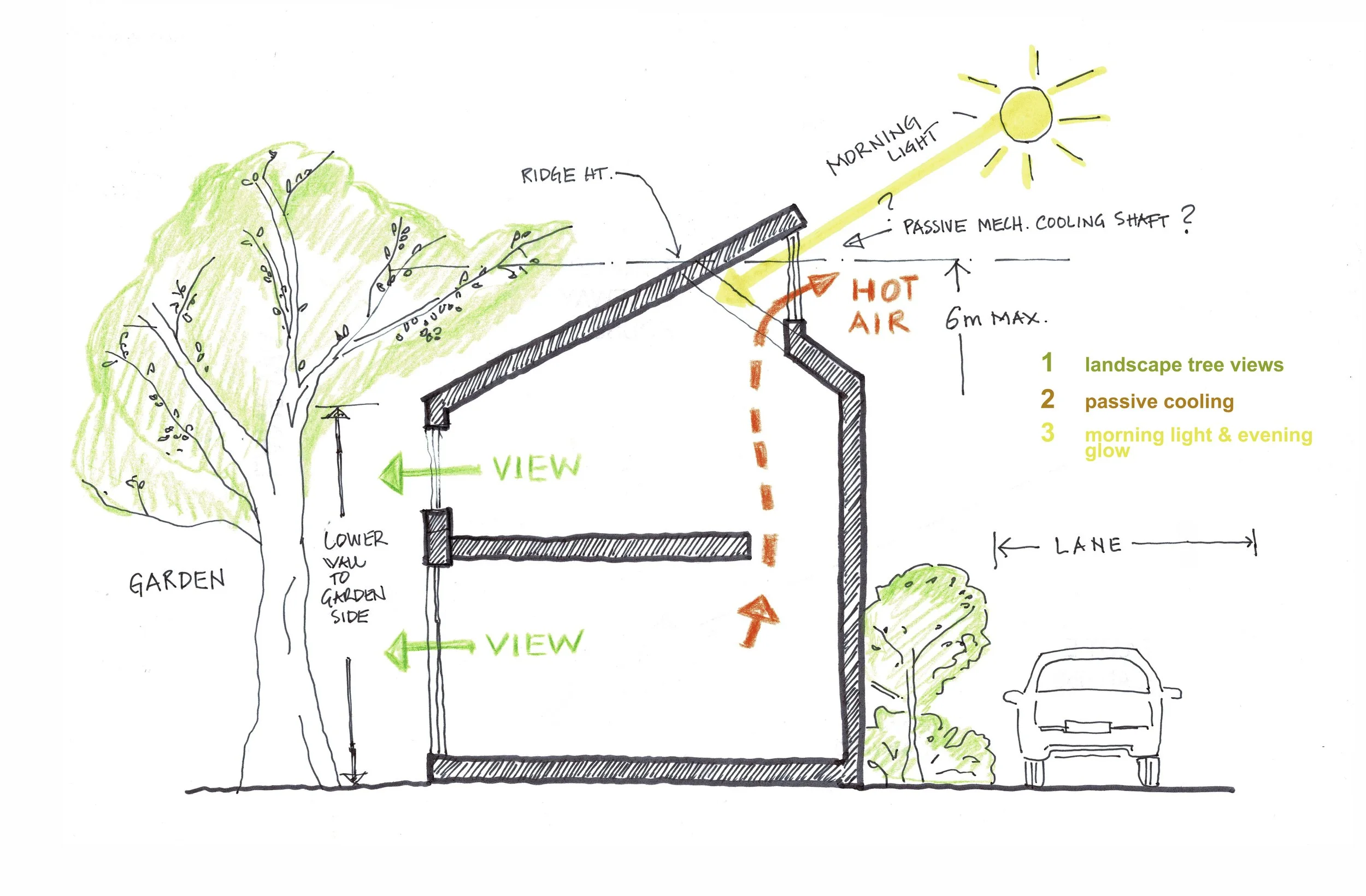
Section through house to study Passive Design Principles
About the Author
Zuzanna Krykorka, BArch, OAA is a licensed architect, designer, and the founder of Studio Z, a Toronto-based practice known for blending heritage, sustainability, and personal meaning into residential design. With over 27 years of architectural experience and over two decades working in Toronto’s historic neighbourhoods, Zuzanna specializes in transforming outdated spaces into elegant homes that meet the modern needs of those who live in them — without losing the character and soul of the original house.