
Case study: Triller Laneway
Project Overview
Project: Triller Laneway House
Location: Parkdale, Toronto, Ontario
Client: Stacy Nichols & Zuzanna Krykorka
Completion Date: 2022
Architect: Studio Z | Zuzanna Krykorka
Studio Z Services: FULL SERVICE | LANEWAY HOUSE DESIGN & BUILD
Background
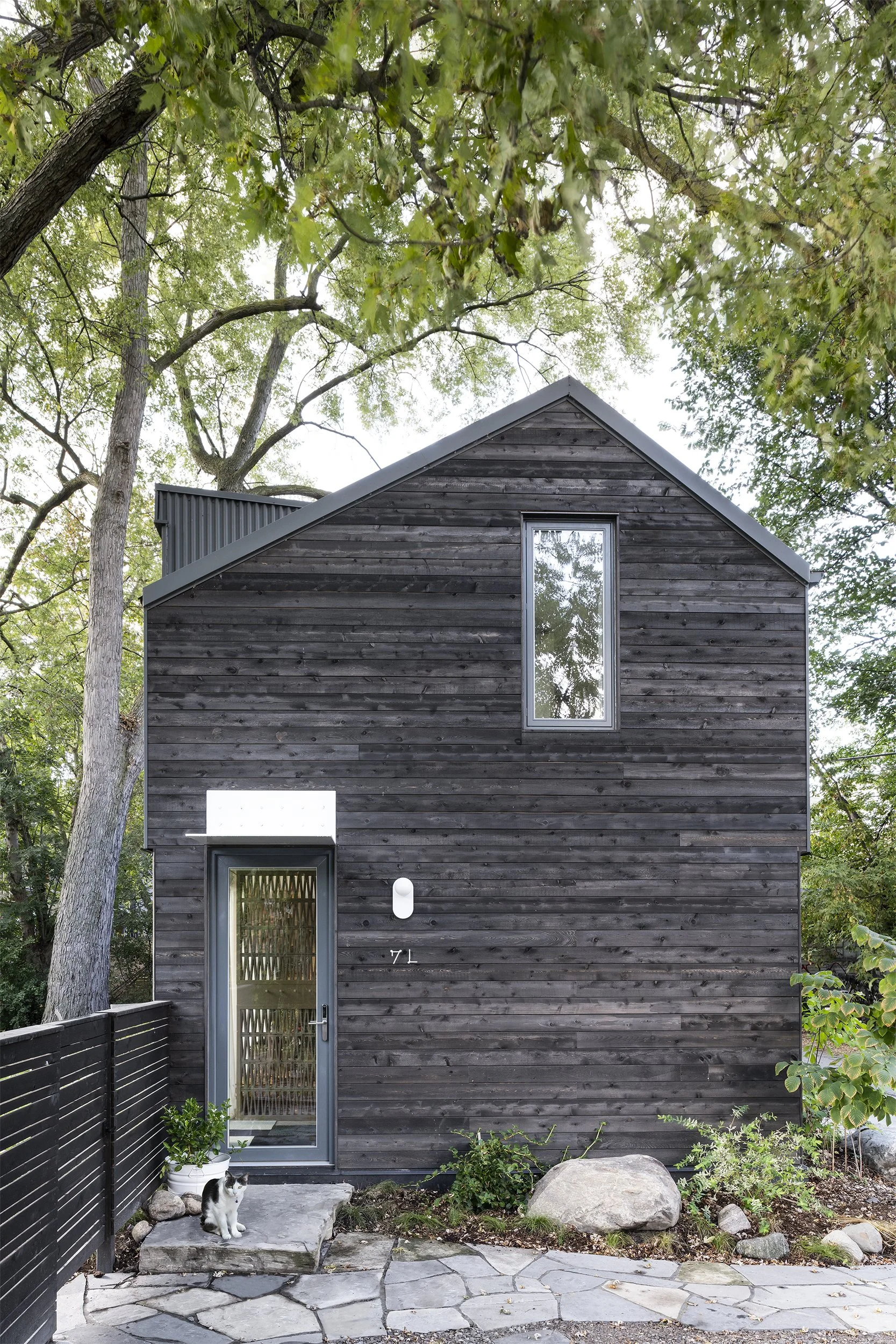
This small-footprint laneway suite was conceived as a flexible, long-term housing solution. Initially, it can be rented to help offset construction costs. In time, it becomes a private, comfortable space for aging parents; and later, a peaceful retirement residence for the homeowners themselves. Built on the footprint of four former parking spaces, the home is a case study in maximizing livability through minimalist, deeply intentional design.
Design Challenges
Respecting zoning setbacks and tree protection requirements
Delivering full comfort and livability across 1,000 sq ft, with compact 500 sq ft floorplates
Connecting the new suite to the main house’s sanitary and electrical systems
Working closely with structural engineers and urban forestry to design a foundation system that would protect the roots of a 100+ year old trees
Designing a two-storey home that feels light and unobtrusive, blending into the backyard landscape without overpowering it.
Rooted in Place, Designed to Endure
Designing for Both the Resident and the Lane
Zuzanna Krykorka approached the Triller project through a dual lens: honouring both the everyday rituals of a home as well as the broader rhythms of the laneway around it. Drawing on her two decades of experience in Toronto’s historic neighbourhoods, and inspired by her own time living in a converted garage apartment in Cabbagetown, she envisioned a home that belongs to the lane as much as to the people who live inside.
“The essential guiding principle - the ‘parti’ - was about actually living in the laneway. A house that is part of the lane, but still private.”
Contextual Sensitivity Over Trend-Driven Design
Rather than chasing trends or maximizing square footage, the design focuses on creating a home that feels rooted in its place, responding to the rhythm of the laneway, the privacy of neighbors, and the canopy of a 100-year-old tree.
A pitched gable roof (rather than a flat one) was intentionally chosen to help the home sit elegantly in the landscape. This ensured the structure wouldn’t overshadow the backyard or dominate the laneway.
Everyday Natural Materials, Elevated
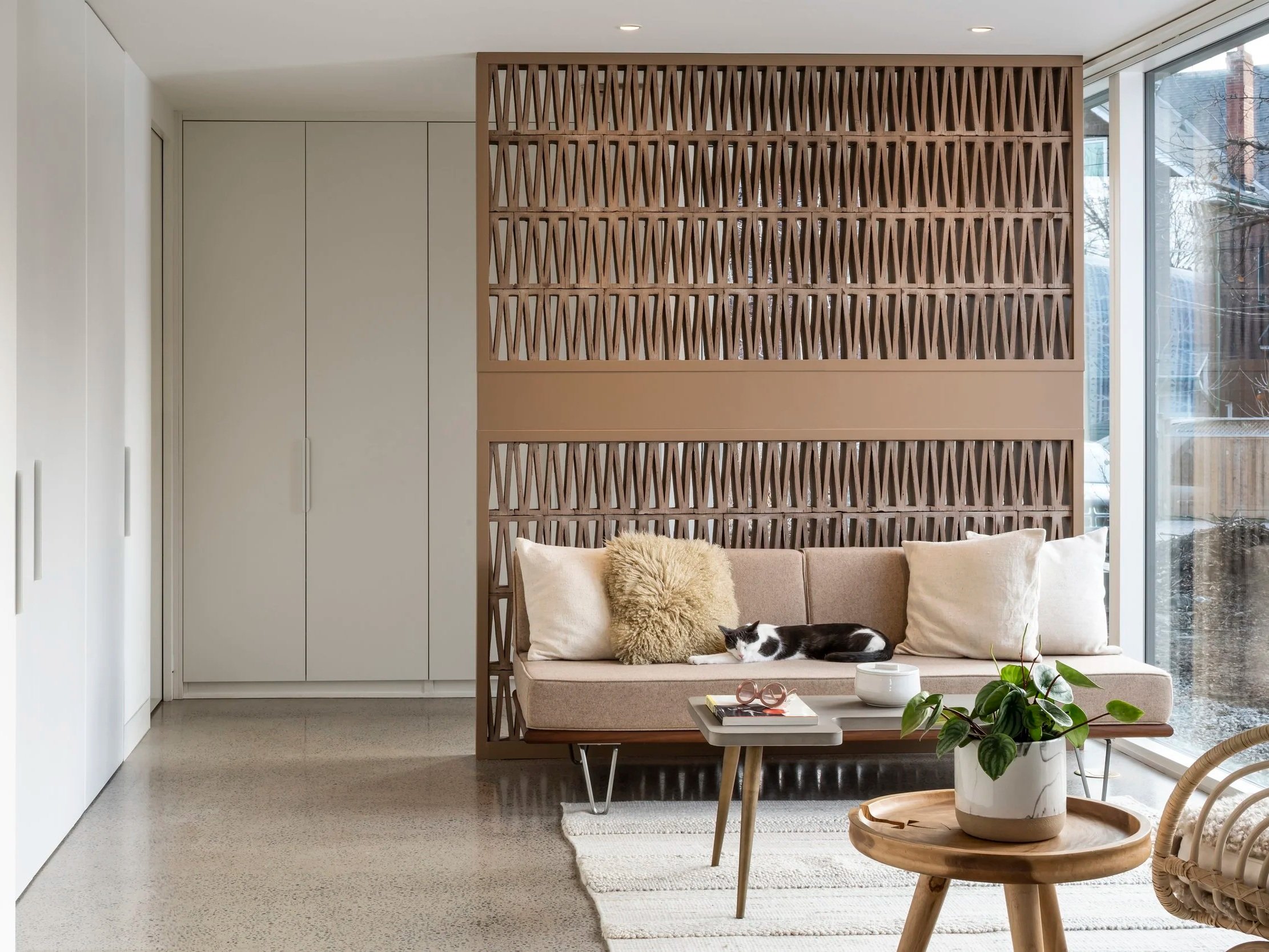
The interior palette reflects honest, natural materials that are as enduring as they are beautiful. From the warm terracotta feature wall to natural plywood cabinetry and polished concrete floors, every surface was chosen to feel grounded, textural, and timeless.
Passive Systems and Long-Term Sustainability
The home’s orientation was designed using passive solar principles, with the sun path studied for both summer and winter conditions. The concrete slab absorbs winter heat and releases it at night, while the existing tree canopy provides natural shade in summer. The envelope is insulated with dense-pack cellulose; the systems are all-electric and solar-ready.
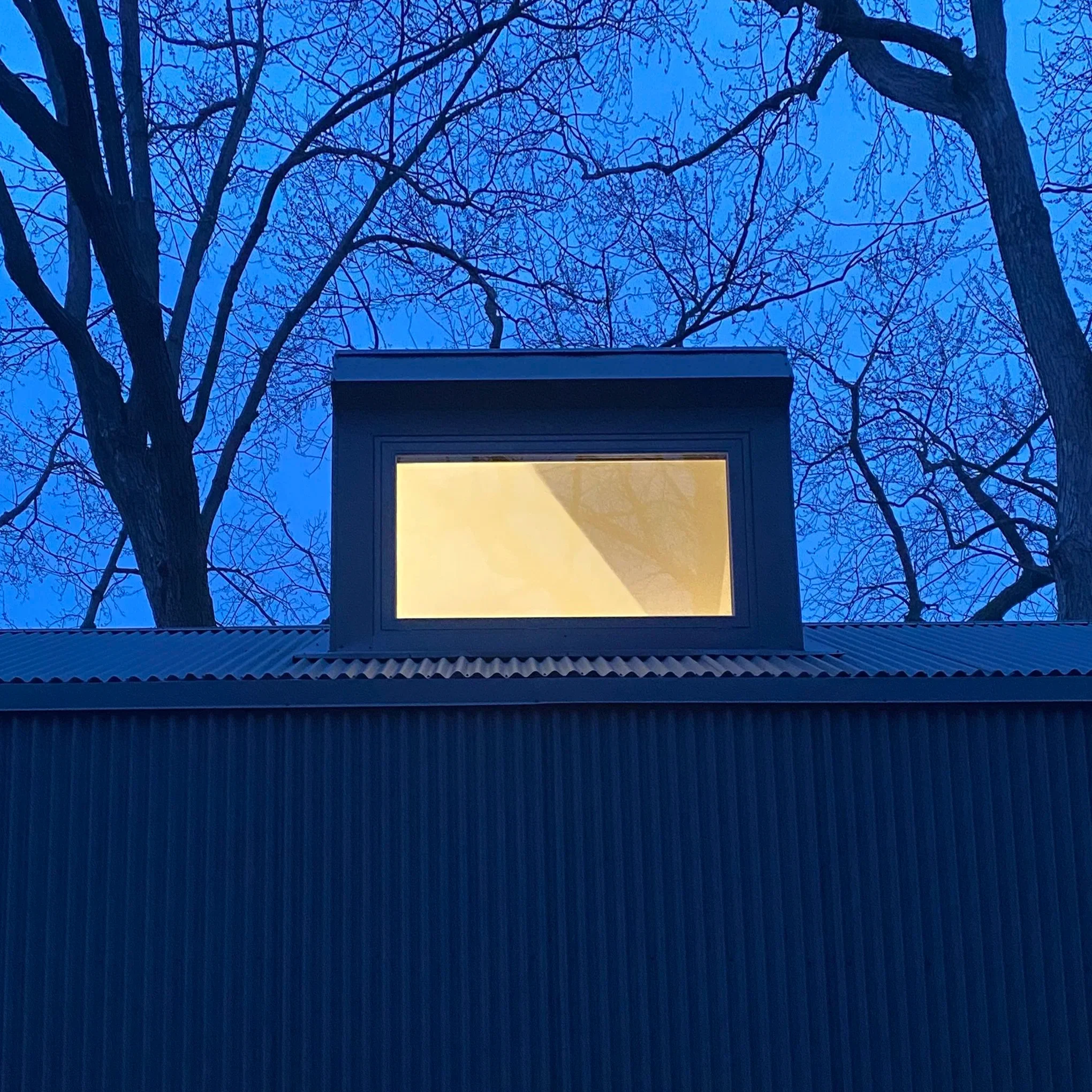
A signature feature - the oculus window - supports passive ventilation through the stack effect, allowing warm air to rise naturally through the stairwell and escape at the highest point of the ceiling. This sustainable approach not only reduces operational costs but reflects Studio Z’s commitment to low-impact, future-proof living.
Light as a Living Element
The oculus window sits above the central stairwell, drawing in sky and light while encouraging natural ventilation.
The choice and placement of windows throughout the home create an unexpected sense of spaciousness, extending the interior outward and inviting the surrounding landscape in.
Though nestled in the heart of the city, the home offers glimpses of tree canopy, filtered sunlight, and open sky, making it feel at times like you’re living in the trees. It’s a quiet dialogue between indoors and out, and a reminder that even in an urban laneway, nature can be part of the experience.
Giving Something Back
This laneway home wasn’t just built on the lane, it was built with the lane in mind. Lighting, massing, and fenestration were all designed to foster presence and safety at night, subtly activating the laneway without overwhelming it. The goal was to make it obvious: “people live here.”
The Result
What began as four underused parking spaces is now a warm, flexible laneway home. Filled with light, grounded in care, and designed to evolve, it currently offers rental income to offset construction costs, will soon welcome aging parents, and ultimately stands ready as a solar-ready, energy-efficient retirement suite.
Compact in scale but rich in intention, the home brings quiet beauty and everyday livability to both the family and the laneway it now gently transforms.
Want to Learn More?
About the Author
Zuzanna Krykorka, BArch, OAA is a licensed architect, designer, and the founder of Studio Z, a Toronto-based practice known for blending heritage, sustainability, and personal meaning into residential design. With over 27 years of architectural experience and over two decades working in Toronto’s historic neighbourhoods, Zuzanna specializes in transforming outdated spaces into elegant homes that meet the modern needs of those who live in them — without losing the character and soul of the original house.